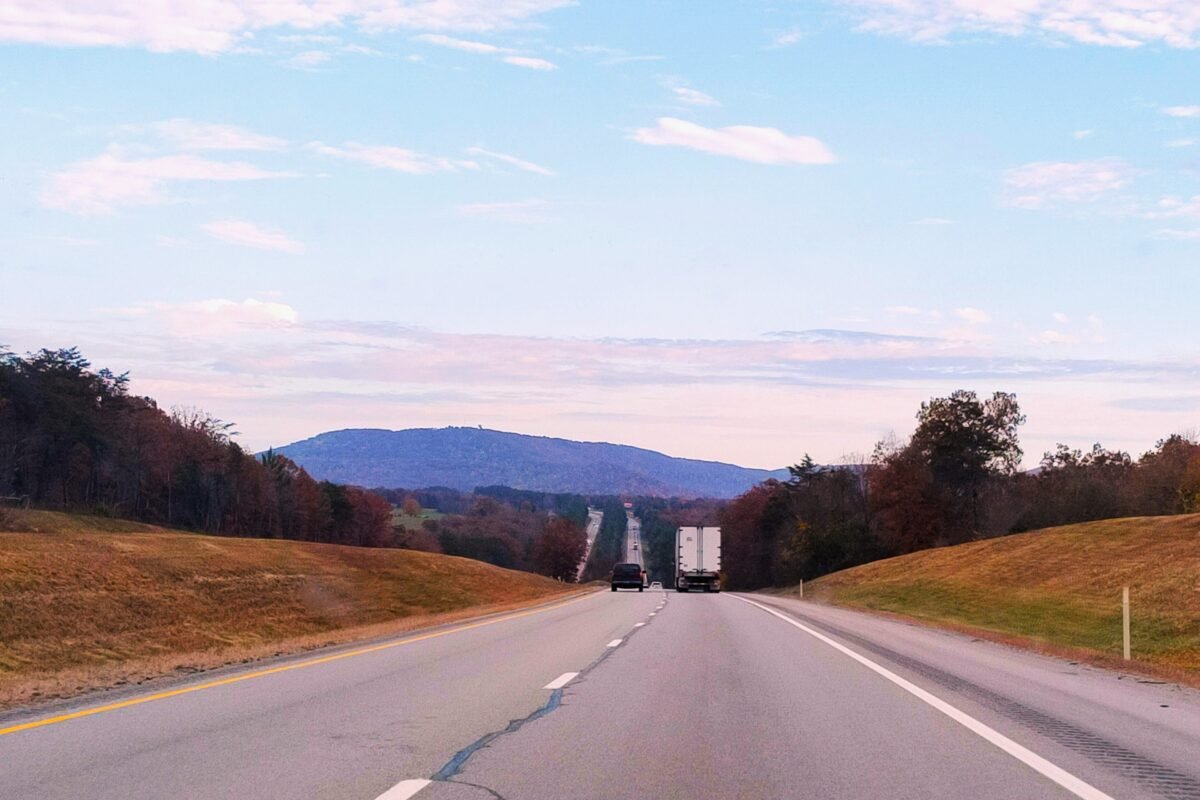
Tennessee sold $32.5 billion worth of itself to visitors last year. That is the state’s record figure, reported in August by the Nashville visitors bureau, with $3.3 billion in state and local taxes behind it. The product is the scenery. We should stop letting people park advertising in front of it.
Our position is simple. Tennessee should close the loopholes that let billboards keep going up and staying up along its scenic routes. Then it should start buying the old ones out. The law already points that way. The state has simply never finished the job.
What the statute already says
Start with what exists. The Tennessee Scenic Highway System Act makes it unlawful to build, operate, or maintain a sign within 2,000 feet of a designated route, outside city limits or anywhere in a tourist resort county, with exceptions for official signs, utility signs, and some small signs. Section 54-17-108 says so. The routes include all of the Natchez Trace Parkway and all of the Foothills Parkway outside incorporated towns, US 321 from Loudon County through Blount and Sevier to Cocke County, and State Highway 66 in Sevier County, according to section 54-17-114. The statute names roads one at a time. A road that is not on the list gets no protection under this act.
Now read the exception. Subsection (c) lets any sign that was lawful before a road was designated be maintained, repaired, or reconstructed under its original permit. Reconstructed. A billboard on a scenic highway can fall down and go back up.
The same section gives the transportation commissioner the power to buy a sign by purchase, gift, or condemnation, paying just compensation. Section 54-17-110 adds that eminent domain may be used to remove existing signs within 1,000 feet of a designated scenic highway. The act dates to 1971. When the legislature rewrote this section in 2020, it kept the purchase power. We found no record that anyone has used it.
Other states finished the job
Vermont did it in 1968. A study committee that included a future U.S. senator, Jim Jeffords, concluded that billboards were harming the state’s scenery, Scenic America records. A Republican House member, Ted Riehle, carried the bill, and Democratic Governor Phil Hoff signed it, VTDigger recounted. Billboard companies called it communist and asked who would pay for the removals. Existing signs got five years, and the last one came down in 1974. Vermont’s travel and tourism industry was worth $3 billion in 2019.
Maine followed. Governor James Longley told his conservation department in 1976 to deal with the billboard problem. The bill, sponsored by former Republican state Representative Marion Fuller Brown, was signed on July 13, 1977, the Natural Resources Council of Maine records. The last removal, a double-sided sign in York County, was completed in 1984. In 2013 the legislature defeated nine bills asking for exceptions. Alaska and Hawaii also ban them, and Alaska voters tightened the rules by ballot in 1998, the Boston Globe noted this month. All four states still let a business advertise on its own property.
The chair of Vermont’s Travel Information Council has said the missing billboards are what travelers most often say they like about the state, the Globe reported.
The honest objections
Money comes first. Along interstates and federal-aid primary highways, federal law does not let Tennessee do to its sign owners what Vermont did in 1968. The Highway Beautification Act requires just compensation when signs are removed because of the law. A 1978 amendment extended that to removals forced by stricter local rules, overriding zoning amortization, the Federal Highway Administration explains. The federal share was 75 percent. Since 1992 states have not been required to spend highway money on removals. In that year about 90,000 nonconforming signs remained nationwide, with a federal cost estimated above $400 million.
So we are not proposing a deadline and a shrug. We are proposing a purchase program. Visitors generated $2 billion in state tax revenue last year. Set aside a sliver of it. Half of one percent is $10 million. Buy signs on the designated routes first, starting with the oldest and ugliest, and draw down federal reimbursement where it is available. Sign owners are lawfully there. They should be paid.
Then comes the courtroom. A sign owner beat the state once. A federal judge in Memphis ruled in 2017 that the old billboard law violated free speech, and the Sixth Circuit agreed in 2019. TDOT stopped enforcing. The legislature then did what it does when money is at stake. A fiscal note put the federal penalty for having no control at more than $93.1 million, and the fix passed the Senate 31 to 0 and the House unanimously, Billboard Insider reported, within a week of each other in June 2020. The lesson is to draft the next law carefully.
Last, the small business. A motel on a rural highway wants to be found. Vermont’s deal allowed on-premises signs and had the state pay for discreet signs for local merchants. Tennessee can write that deal too.
What we would change
Four things. End the right to reconstruct a grandfathered sign on a designated route. Add the roads visitors actually drive to reach the state’s parks to the designated list. Use the commissioner’s purchase power, with money set aside to do it. Stay alert to bills like SB 735, introduced in February 2025. Scenic America warned it would bar cities and counties from using amortization to phase signs out. As of its last recorded action, in April 2026, it had passed neither chamber, legislative records show.
Local governments are ahead of the state. Knoxville banned new billboards at new locations in 2001, and Knox County banned new digital ones in 2013, Compass reported. Existing signs were grandfathered.
Vermont’s last billboard came down in 1974. Tennessee’s will come down when somebody decides to pay for it, and the statute already says who may.