At a Glance
Start: Crossville, Tennessee
End: Rugby, Tennessee, by way of Jamestown, Pickett State Park, and Big South Fork
Total Distance: About 35 miles from Crossville to Jamestown, then shorter legs of roughly 15 to 25 miles, by our own estimate
Recommended Duration: Two days
Number of Stops: 5
Open in Winter: Big South Fork is open year round, but some facilities close
Best Season: Early December for Christmas at Rugby; late autumn through winter for open views
Rugby was christened on October 5, 1880, with about 100 residents and Anglo-American investors behind it. The population reached about 300 by the summer of 1881, then fell to about 60 after typhoid killed seven settlers. The village survives, and so does the plateau it was built on, and the two together make a better road trip than most of Tennessee gets credit for.
This is the northern Cumberland Plateau, where Tennessee meets Kentucky. Crossville and Jamestown are the gateways, and beyond them lies Big South Fork National River and Recreation Area, 125,000 acres of gorge, sandstone, and old coal country. Congress directed its establishment on March 7, 1974. Pickett State Park and Rugby fill in the edges. The route below takes two days and keeps its driving short. By our own rough estimate, the longest single leg, Crossville to Jamestown, is about 35 miles, or under an hour.
Day one: the stone dam and the dark
Cumberland Mountain State Park, Crossville
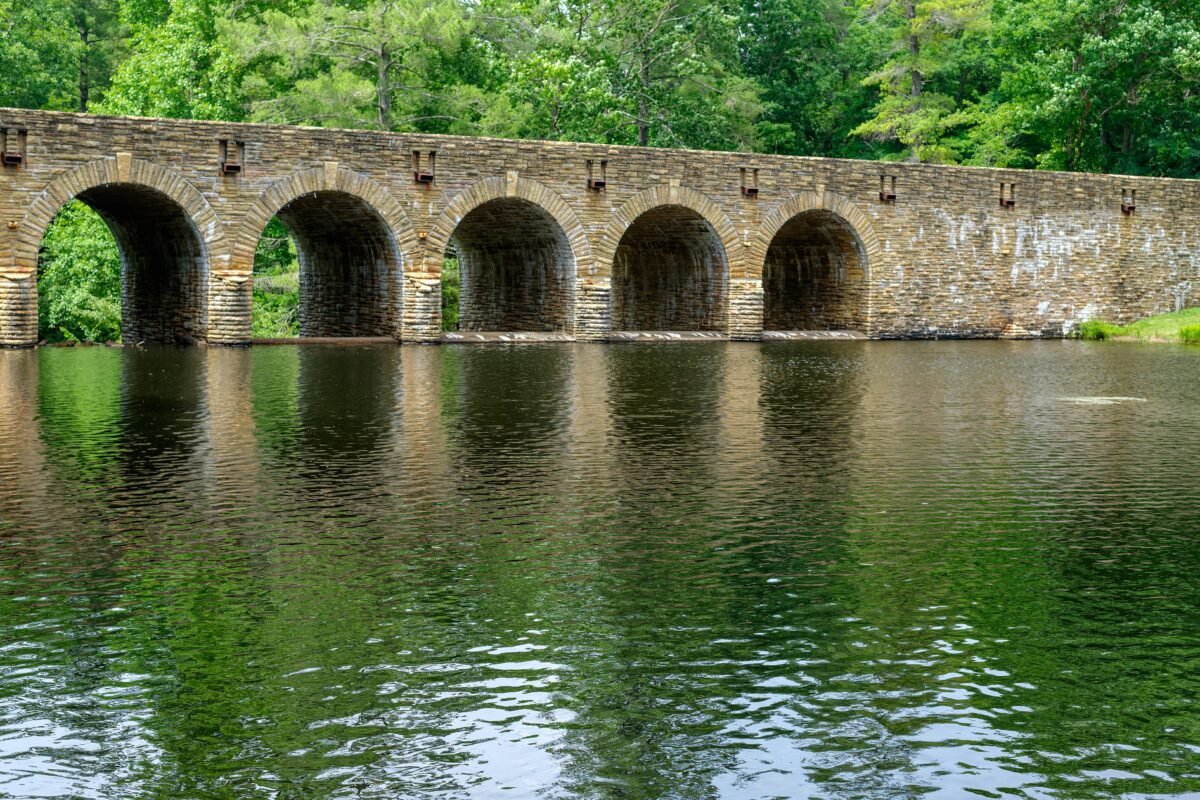
Begin with a dam. Between 1935 and 1938, Civilian Conservation Corps Company 3464 built a stone dam in what is now Cumberland Mountain State Park, using locally quarried Crab Orchard stone. It is 347 feet long. The Tennessee Encyclopedia calls it the largest masonry structure the CCC built anywhere in the country. The park, 1,720 acres in all, was first the outdoor recreation center for the Cumberland Homesteads, a New Deal resettlement project on the plateau.
Plan for an hour at the dam and the lake behind it before the road turns north.
Jamestown and Pickett CCC Memorial State Park
From Crossville, Jamestown is about 35 miles north. From Jamestown, Pickett State Park is another 15 miles or so, about half an hour. The land came to the state in 1933, when a Michigan-based coal and lumber company that had held it since 1910 deeded it over. Governor Hill McAllister declared it a state forest on December 13 of that year, and in 1934 CCC Company 1471 arrived to build the park. The crews made a dam and a lake of about twelve acres, built some 22 miles of roads along with trails, and put up a lodge, cabins, picnic areas, fire towers, and ranger stations. The buildings were designed in native materials to fit the landscape, and the park and forest around them cover close to 12,000 acres of reforested land with natural bridges, caves, and rock formations.
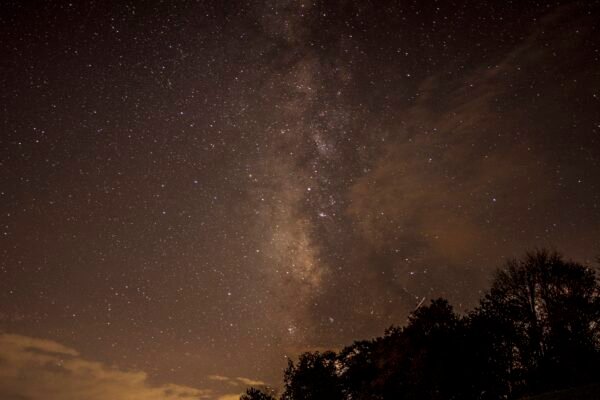
Pickett shares a second distinction with the Pogue Creek Canyon State Natural Area next door. In May 2015 the two were named Pickett-Pogue International Dark Sky Park, a Silver-tier designation and the first for any Tennessee state park. A designation like that exists to protect the night, and it makes the park a reasonable place to end the first day.
Day two: Big South Fork and Rugby
Bandy Creek and Twin Arches
The Bandy Creek Visitor Center is the park’s main door. It stands next to Bandy Creek Campground, 24 miles east of Jamestown and 15 miles west of Oneida, off Highway 297. It is open year round from 9 a.m. to 5 p.m. Eastern, and it closes only on Thanksgiving and Christmas Day. There is no entrance fee, and the Park Service says visitors do not need an entrance pass, though some activities carry their own charges. One standing closure remains on the park’s alerts list: the historic Blue Heron Tipple Bridge, shut in October 2023 after a federal inspection found its decking leaning beyond acceptable standards. The Park Service has given no reopening date.
The big sight is the Twin Arches. The North Arch has a 51-foot clearance, a 93-foot span, and a deck 62 feet high. The South Arch is larger, with a 70-foot clearance, a 135-foot span, and a 103-foot deck. The walk from the parking lot to the arches is 0.7 mile. A 4.6-mile loop trail continues past them, rated moderate by the Park Service, with steep wooden stairs and cliff edges along the route.
The park’s human history goes back ten thousand years. The 20th-century chapter belongs to coal. Blue Heron, on the Kentucky side, also known as Mine 18, was a Stearns Coal and Lumber Company town, and its mines were worked from 1937 until December 1962. Blue Heron Campground will stay open from December 2026 through March 2027 as a pilot, to see whether winter demand is enough to keep it open year round.
Rugby
Rugby is about 20 miles from Jamestown, at the northern tip of Morgan County, and it is the last stop. An Anglo-American company built it, joining Boston capitalists who held about 75,000 acres in East Tennessee with the English author Thomas Hughes, whose Tom Brown’s School Days appeared in 1857. It has been called the last attempt at English colonization in America. Hughes visited often but never lived in it. After its 1880 christening the colony met typhoid in 1881, a fire that destroyed the Tabard Inn, and investors who tried to manage it from London and Boston. It shrank. In 1966 a group led by 17-year-old Brian Stagg formed the Rugby Restoration Association, and from it grew Historic Rugby, a nonprofit since that year.
What stands now is a village tour: the 1882 Thomas Hughes Free Public Library, which Historic Rugby describes as the first free public library in the South, Kingstone Lisle, built in 1884 as the founder’s home, and Christ Church Episcopal, from 1887. A free 22-minute film at the Visitor Centre starts the tour. The Visitor Centre is open Thursday through Saturday, 9 a.m. to 5 p.m. Eastern, and Sunday, noon to 5 p.m.
December is the month to aim for. Christmas at Rugby takes place on the first two Saturdays, December 5 and 12, 2026. The program includes caroling, holiday shopping, hot drinks and cookies in decorated historic buildings, and tours of select private homes. Father Christmas visits, the Rugby Cornet Band plays on both Saturdays, and the tree is lighted at the gazebo at 5:30 p.m. Eastern. Christ Church Episcopal holds a service of Lessons and Carols at 4:30 p.m. Eastern on both Saturdays. On December 12, Mike McGill gives a free concert at 8 p.m. in the Rebecca Johnson Theatre. Historic Rugby gives the festivities as 11 a.m. to 5 p.m. Eastern, while its event listing extends to 8 p.m. to take in the evening program. Tour tickets are sold online, and the listing does not post prices, so call 423-628-2441 before planning the day.
What winter changes
Big South Fork stays open, and the Park Service says only that some facilities close, without listing which. Blue Heron’s interpretive center operates from Memorial Day weekend through October 31, though its outdoor museum is open year round. The Rugby visitor contact station is a summer operation. Check the park’s alerts page and call 423-569-9778 for conditions before heading for a trailhead.
Plan your trip
- Bandy Creek Visitor Center: 151 Stable Road, Oneida, open 9 a.m. to 5 p.m. Eastern daily except Thanksgiving and Christmas Day. Phone 423-286-7275.
- Fees: Big South Fork has no entrance fee. Some locations and activities carry their own.
- Twin Arches: 0.7 mile from the lot to the arches. The 4.6-mile loop is moderate, with steep stairs and cliff edges.
- Rugby: Visitor Centre open Thursday through Saturday and Sunday afternoon. Christmas at Rugby on December 5 and 12, 2026, with festivities from 11 a.m. to 5 p.m. Eastern. Phone 423-628-2441.
- Time zones: the Crossville visitor center lists Central time, while Bandy Creek and Rugby list Eastern, so check each listing for CT or ET before you set a schedule.
- Camping: Blue Heron Campground, on the Kentucky side, is open December 2026 through March 2027 as a pilot. Reserve on Recreation.gov.
Frequently asked questions
How big is Big South Fork National River and Recreation Area?
About 125,000 acres of the Cumberland Plateau, protecting the Big South Fork of the Cumberland River and its tributaries. Congress directed its establishment in 1974.
Is Big South Fork open in winter?
Yes. The park is open year round, though some facilities close in winter. Blue Heron Campground in Kentucky is open December 2026 through March 2027 as a pilot.
What are the Twin Arches?
Two sandstone arches in the park. The North Arch spans 93 feet and the South Arch spans 135 feet.
When is Christmas at Rugby in 2026?
On the first two Saturdays in December, December 5 and 12, with carols, a tree lighting, and tours of select private homes.
Is Pickett State Park a dark-sky park?
Pickett and Pogue Creek Canyon State Natural Area together were designated a Silver-tier International Dark Sky Park in 2015, the first for a Tennessee state park.
How we reported this
This route was built from National Park Service pages, the Tennessee Encyclopedia, Historic Rugby’s own site, and press coverage of the dark-sky designation, all checked in November 2026. Distances and drive times between towns are approximate.
- National Park Service, Big South Fork National River and Recreation Area
- National Park Service, Big South Fork: Park Management
- National Park Service, Big South Fork: Visitor Centers
- National Park Service, Big South Fork: Fees and Passes
- National Park Service, Big South Fork: Alerts and Conditions
- National Park Service, Big South Fork: Operating Hours and Seasons
- National Park Service, Big South Fork: History and Culture
- National Park Service, Blue Heron
- National Park Service, Temporary closure of the Blue Heron Tipple Bridge
- National Park Service, Blue Heron Campground winter 2026-2027
- National Park Service, Twin Arches Loop Trail
- Historic Rugby
- Historic Rugby, Christmas at Rugby 2026
- Tennessee Encyclopedia, Rugby
- Tennessee Encyclopedia, Cumberland Mountain State Park
- Tennessee Encyclopedia, Pickett State Rustic Park
- Chattanoogan, Tennessee State Park Designated as an International Dark Sky Park