In September 1942, Gen. Leslie Groves approved a stretch of ridges and farmland along the Clinch River, about 20 miles west of Knoxville, as a top-secret site for making the fuel of an atomic bomb. The approval covered roughly 59,000 acres. The Army first called the place Site X, then the Clinton Engineer Works, after the nearest town. The name Oak Ridge came later.
The change came fast. A town planned for 13,000 residents grew to more than 75,000 by the end of World War II, the largest of the three main Manhattan Project centers. By the war’s end it was the fifth-largest city in Tennessee. Its workers were told very little.
The Manhattan Project National Historical Park, established in 2015, now interprets Oak Ridge alongside Hanford, Washington, and Los Alamos, New Mexico. The Tennessee unit held the largest population of the three, and some of the stories its sites tell are hard ones.
The land and the people who lived on it
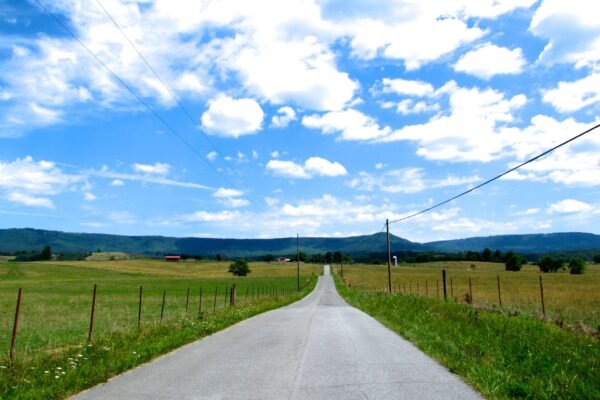
Before 1942, the area was a set of small farming communities. The government bought almost 100 square miles that year. About 1,000 families lived on the land, and they were forced off it with minimal compensation, often with only a few weeks to leave. Most of the removals were done by mid-February 1943. Their farms became a guarded military reservation.
Security was layered. Armed guards staffed the gates around the clock during the war. The Park Service counts 4,900 civilian guards, 740 military police, and more than 400 civilian police on the reservation. Billboards reminded workers not to discuss their jobs.
Three ways to make a bomb’s fuel
Oak Ridge was built to do two things: make enriched uranium and pilot the production of plutonium. The work happened at separate plants with letter-and-number names.
At X-10, the Graphite Reactor reached criticality in the early morning of November 4, 1943, and produced its first plutonium by the end of that month. The Park Service calls it the world’s first plutonium-producing reactor. It operated until 1963 and produced about 326 grams of plutonium between 1943 and 1945, shipped to Los Alamos.
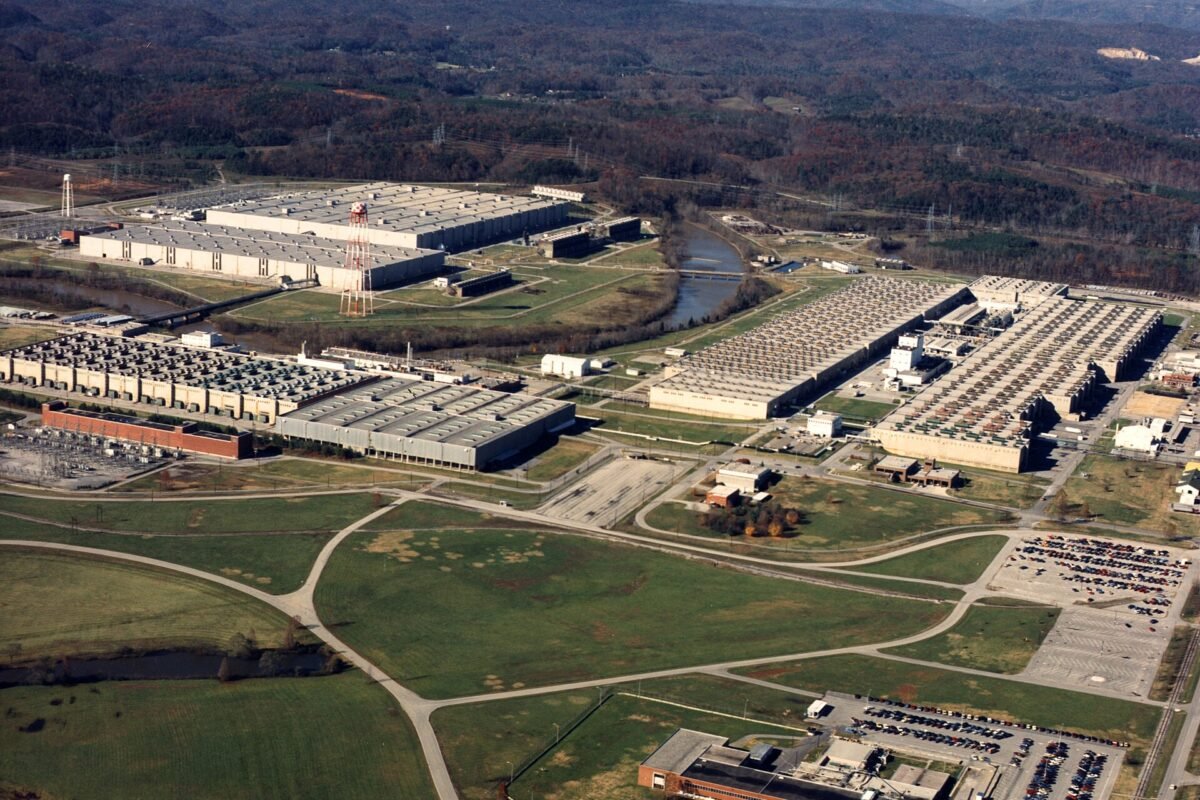
Y-12 separated uranium electromagnetically. Groundbreaking for its Alpha plant came on February 18, 1943. The plant held 1,152 machines called calutrons, and many of the people who watched their dials were young women from East Tennessee, many of them recently out of high school. The work paid more than the area’s textile mills. They were told they were “helping the boys” overseas. One of them, Ruth Sisson Huddleston, described what she learned afterward: “I found out the day after they bombed Japan that we had a part in it.”
K-25 used gaseous diffusion. Construction began in 1943. More than 10,000 people worked there at the 1945 peak, and the Park Service describes it as the largest building in the world during the Manhattan Project. The plant cost $512 million to build. A third process, S-50, used liquid thermal diffusion. The uranium for the bomb dropped on Hiroshima on August 6, 1945, was enriched at Oak Ridge.
A segregated secret city
Oak Ridge was built under Jim Crow, and the project’s housing followed it. Black workers lived in a hutment area, rows of plywood huts about 16 by 16 feet with screenless shuttered windows and a central oil stove. Four to six residents shared each one. Hutments were the lowest form of permanent housing for workers, and they held mostly Black men and women, with only a few white men.
The women’s hutment area, fenced with scrap lumber, was known as the “women’s pen” and had a strict 10 p.m. curfew. A five-foot fence topped with barbed wire separated the Black housing from the rest of the community, and married couples could not live together. Near the war’s end, contractors built several family hutments, each made of two huts joined by a small shed, with no electricity or running water. They were the only housing for Black families during the war.
Wages were a real draw. Black laborers were offered 58 cents an hour or more, usually higher than they could earn elsewhere in the South. At Oak Ridge and Hanford, though, most Black workers were employed as construction workers, laborers, janitors, and domestic workers. Daily life was divided as well. White workers could use shops, churches, and recreation facilities across town. Black residents of the hutment area had one recreation hall. White residents could see movies every day in new theaters for 40 cents, while Black workers were offered films only twice a week, in that same hall, for 35 cents. After the war, Enoc Waters of the Chicago Defender published a series of articles documenting what Black workers faced.
White workers had left the hutments by 1945. Many Black workers remained in them until 1950, and the Scarboro community was developed afterward in response to those conditions. Oak Ridge desegregated its junior high and high schools in 1955. Nothing remains of the site where most of the hutments stood; it is now a modern commercial development. A Park Service wayside on South Illinois Avenue tells the story of the segregated recreation hall.
The gates come down
On Saturday, March 19, 1949, Oak Ridge opened to the public. At Elza Gate, after about 15 minutes of speeches, Dr. George T. Felbeck used energy from the X-10 reactor to “cut” a symbolic ribbon, which vanished in a puff of smoke. The city held a parade with 20 marching bands. The Elza Gatehouse has since been demolished, and Elza Gate Park now marks the spot with trails and wayside exhibits.
What a visitor can see now
Oak Ridge is open to explore year-round, and the Park Service’s Oak Ridge office is at (865) 482-1942. A museum is a good place to start.
The American Museum of Science and Energy, at 115 East Main Street, tells the story of science and engineering in Oak Ridge since the Manhattan Project. It also organizes the Department of Energy’s public bus tour.
The K-25 History Center, at 652 Enrichment Street, honors the people who built and operated the K-25 complex. It has interactive galleries, a gallery where visitors try running the plant, and more than 1,000 oral histories from former employees. Admission is $15 for adults and $10 for seniors, military, and youth ages 10 to 17. The park’s K-25 Overlook and Visitor Center stands on the former site of Happy Valley, the K-25 workers’ town, and is managed by Roane Tourism.
The DOE Public Facilities Bus Tour is the public’s way onto the federal sites. Its 2026 season, the 30th, began March 30, with tours tentatively set for Mondays, Thursdays, and Fridays through November. The tour takes about three and a half hours, starting at 9 a.m. from the museum’s parking lot. The regular stops are the K-25 History Center, the Oak Ridge National Laboratory building that houses a quantum computer, and the New Hope Visitor Center at Y-12. Tickets are $20, and reservations are required. Riders must be U.S. citizens at least 10 years old, and adults need an original government-issued photo ID. Bags larger than 12 by 12 inches are not allowed.
The Graphite Reactor is the hardest piece to see. The bus tour’s regular route does not include it. In 2026, only a few special tour dates add the reactor and the Y-12 Pilot Plant, at a higher fare. Check the reservation page for any special date left in the season before planning around it.
Plan your trip
- Museum: American Museum of Science and Energy, 115 E. Main St., Oak Ridge. 865-294-4531.
- K-25 History Center: 652 Enrichment St., Oak Ridge. 865-685-8050.
- DOE bus tour: reserve through the museum’s bus tour page. Bring a government photo ID.
- National Park Service: Oak Ridge office, 865-482-1942.
- Check before you go. Hours, prices, tour dates, and reactor access are set by each site and can change.
Frequently asked questions
Why was Oak Ridge called the Secret City?
The government built it in 1942 as a closed reservation, with guarded gates, for making fuel for the first atomic bombs. It stayed closed to the public until March 19, 1949.
Can anyone take the Oak Ridge bus tour?
Riders must be U.S. citizens at least 10 years old, with a reservation. Adults need an original government-issued photo ID.
Can visitors go inside the Graphite Reactor?
Not on the regular bus tour. In 2026 the tour includes it only on a few special dates, so check the reservation page before planning around it.
How we reported this
Built from National Park Service and Department of Energy materials, museum and archive resources, and the sites’ own pages. Check dates and hours before you go. If something has changed, write to editor@uppersouthjournal.com.
- National Park Service: About Oak Ridge, People of Oak Ridge, Park management, and the 10th anniversary release, March 31, 2026
- National Park Service: African American Hutments, Segregated Recreation, Elza Gate, and K-25 Overlook and Visitor Center
- Atomic Heritage Foundation: Oak Ridge, TN and African Americans and the Manhattan Project
- National Archives Prologue: The Calutron Girls
- American Museum of Science and Energy: 2026 DOE bus tour and museum
- ORAU, May 4, 2026: Museum of Radiation and Radioactivity now offered to Oak Ridge bus tour participants
- K-25 History Center: home and visit, plus the DOE’s K-25 Atomic History Center visit page
- U.S. Department of Energy, OSTI: The Manhattan Project: Oak Ridge
- Tennessee Encyclopedia: Oak Ridge