At a Glance
Coverage: Dunlap, Pikeville, Fall Creek Falls State Park, Whitwell, Jasper, and South Pittsburg
Best Season: Late fall, when the leaves are down and the valley walls show their full shape
Trip Length: A weekend, with an early Saturday start at the overlook and Sunday for the valley’s southern end
Skill Level: Easy to moderate; the museums and overlooks are short walks, and the park trails range from paved to steep
Closest Major Airport: Chattanooga Metropolitan Airport (CHA); the valley begins on the far side of Walden Ridge from the city
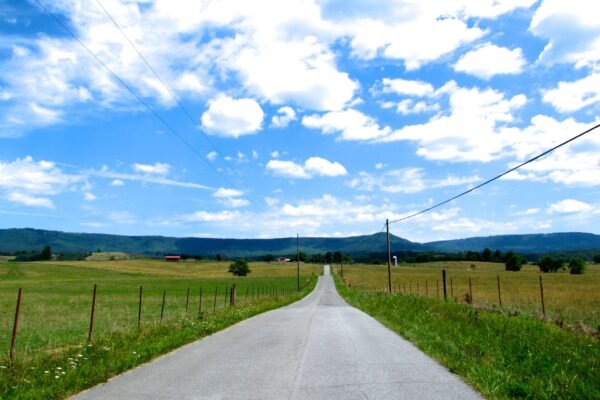
The Sequatchie Valley is arrow-straight, a slot between two mountain walls whose line shows on any map. Its full length is about 200 miles, from northern Cumberland County in Tennessee to Blount County in Alabama, with roughly 75 of those miles in Tennessee. It averages about 5 miles wide and is 1,000 to 1,500 feet deep. Geologists think erosion of a compression anticline made it: the rock layers were pushed up into an arch, and erosion then wore the crest away. A weekend here follows the valley from Dunlap, down through coal and cast-iron country, with a detour up to Fall Creek Falls.
Early Saturday: the view from Walden Ridge
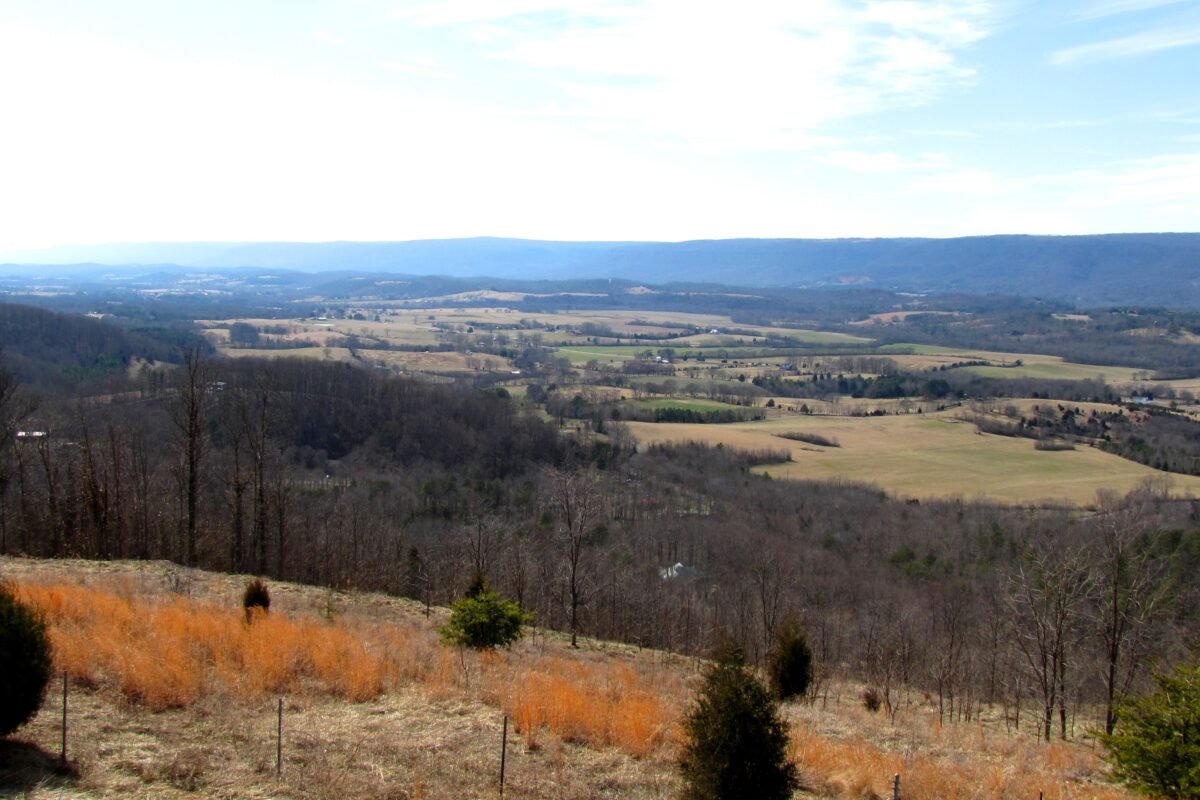
Start at the top of the ridge. Tennessee State Route 111 climbs Walden Ridge from Soddy-Daisy and drops into the valley at Dunlap, where it meets US-127. About four miles south of the US-127 intersection, a state tourism overlook faces the valley, with access southbound only. Plan the approach so you are headed south when you arrive. A colorblind viewfinder fitted with EnChroma lenses was installed there by the Tennessee Department of Tourist Development, and the view looks across the narrow valley to the Cumberland Plateau on the far side.
Early morning is the time to stop, when wisps of fog can drift through the trees with Walden Ridge rising behind.
Saturday morning: the Dunlap Coke Ovens
The Dunlap Coke Ovens Park is about three-quarters of a mile west of downtown on US-127. The park covers 88 acres and holds 268 beehive coke ovens, the stone domes in which local coal was baked into coke for ironmaking. Coal mining on Fredonia Mountain, overlooking Dunlap, began in 1899. The company store and the first 24 ovens went up in 1902, and about 1906 another 144 ovens and a steam-powered coal washer followed. A new railroad along Little Brush Creek arrived in 1916, with 100 more ovens built on the east end of the site. Mining stopped in 1927, as coal prices fell and the Depression came on.
For more than 50 years the ovens went untended, battered by weather, dumping, and rock theft. In the mid-1980s local citizens formed a historical group and started clearing the debris. Bowater Southern Paper Company later donated the property to the Sequatchie Valley Historical Association, and the site is now on the National Register of Historic Places. The grounds are free and open from sunup to sundown all year. The museum, also free, holds photographs and artifacts from the early 1900s and keeps weekend hours from April through November: 10 a.m. to 4 p.m. Saturday and noon to 4 p.m. Sunday, Central time. Volunteers lead group tours by appointment; call 423-949-2156 to arrange one.
Downtown, the Dunlap Mercantile at 15664 Rankin Avenue is a two-story brick building completed around 1899, though local oral history has long given 1894. Its National Register nomination identifies it as Dunlap’s first brick commercial building. It was a general merchandise store for more than 80 years, and from the 1920s the Dunlap Products Company canned locally grown tomatoes inside it. A rehabilitation finished in 2020, and the building now houses a store and event venue. In September 2026 it was one of 11 Tennessee properties under consideration for the National Register.
Saturday afternoon: Pikeville and Fall Creek Falls
Pikeville was established in 1816 on land donated by Charles Love, and it became the Bledsoe County seat in 1818. The valley had been Cherokee land until the Treaty of Tellico in 1805. The town’s history page points visitors to a short list of landmarks: the red-brick Bledsoe County Courthouse, used briefly as a Confederate field hospital in 1862; the John Bridgman House, a Federal-style home built about 1830; and the Dr. James A. Ross House, a Folk Victorian home that now holds the Bledsoe County History Museum. Many buildings in the historic district are on the National Register.
Fall Creek Falls State Park lies between Pikeville and Spencer on the Bledsoe and Van Buren county line. Its namesake waterfall drops 256 feet, and the park has more than 56 miles of trails. Piney Falls, Cane Creek Falls, and Cane Creek Cascades are among its other falls. Named overlooks include Cane Creek Gorge, Rocky Point, and Millikan’s, and there is a view of the main falls near the parking lot. The Gorge Trail looks out on Cane Creek Falls, Rockhouse Falls, and the gorge, while the Cable Trail goes down to the base of Cane Creek Gorge.
The federal government began buying the badly eroded land around the falls in 1937, and the National Park Service handed the property to the State of Tennessee in 1944. The park’s address for navigation is 2009 Village Camp Road, Spencer. Check the Tennessee State Parks page for trail conditions and closures before you drive up.
Sunday: Whitwell, Jasper, and South Pittsburg
Marion County was created in 1817 from Cherokee lands. Its first court met that year at a private house in what is now Whitwell, and coal mines opened there later. In 1819 the county seat moved to Jasper, on forty acres sold to the commissioners by Betsy Pack, a Cherokee woman. The courthouse was finished in 1820.
The Marion County Coal Miners Museum at 900A Main Street in Whitwell tells that mining story. Coal came out of the county in small amounts from the 1840s and became a major industry after the Civil War. Admission is free, and donations are welcome. Hours are 8 a.m. to 5 p.m. Monday through Friday and 8 a.m. to noon Saturday, Central time, with no Sunday hours, so a Saturday-morning visit fits best. Whitwell is also home to the Children’s Holocaust Memorial at 1 Butterfly Lane, built from the Paper Clip Project that Whitwell Middle School students developed. Self-guided and student-led tours are available.
At the valley’s southern end, South Pittsburg is the home of Lodge Cast Iron. Joseph Lodge founded the company in 1896 as the Blacklock Foundry, and descendants of the Lodge family still own it. The Lodge Museum of Cast Iron opened in October 2022 at 220 East 3rd Street. Exhibits cover how the cookware is made, the company’s history, and cast iron in Southern food culture, and the world’s largest cast iron skillet, more than 18 feet from handle to handle, is on display. The museum is open daily from 8 a.m. to 6 p.m. Central. Admission is $10 plus tax, and children 5 and under are free.
Where to eat
Both places are in Dunlap.
Dunlap Restaurant, at 17238 Rankin Avenue, opens early for a country breakfast: biscuits with made-from-scratch gravy, country ham and eggs, and a waffle made with malted milk powder. Later in the day come meat-and-three plates and daily specials.
The Cookie Jar Cafe, at 1887 Kelly Cross Road, has been part of Dunlap since 2002. It began as a small bakery known for made-from-scratch cookies and pies and grew into a family restaurant in a renovated farmhouse off US-127. Call ahead for hours and reservations at 423-949-5852.
Plan your trip
- Getting there: TN-111 starts at US-27 in Soddy-Daisy, climbs Walden Ridge, and meets US-127 at Dunlap, about 17 miles along the route. The overlook is reached southbound, four miles south of that junction.
- Getting around: the valley’s towns are strung along one long line, so a car is the practical choice. TN-111 passes through Spencer, just west of Fall Creek Falls State Park.
- When to go: late fall thins the leaf cover and opens the long views. Museum hours vary by day and season, and the Coal Miners Museum keeps no Sunday hours.
- Before you go: confirm hours with the Coke Ovens museum, the Coal Miners Museum, the Lodge museum, the restaurants, and the state park, since all can change.
Frequently asked questions
Which way do you approach the TN-111 overlook?
Southbound only. It is about four miles south of the US-127 intersection on TN-111, outside Dunlap.
Is the Dunlap Coke Ovens Park free?
Yes. Admission and parking are free, and so is the museum, though donations are accepted. The grounds are open from sunup to sundown, and the museum keeps weekend hours from April through November.
How tall is Fall Creek Falls?
256 feet, one of the highest waterfalls in the eastern United States.
Why is the Sequatchie Valley so straight?
Geologists think the valley formed when erosion wore away the crest of a compression anticline, an arch of rock layers pushed up by pressure. Walden Ridge forms the southeast wall, and the Cumberland Plateau forms the northwest.
Can you visit the Lodge cast iron museum on a Sunday?
Yes. The museum is open seven days a week, 8 a.m. to 6 p.m. Central.
How we reported this
This weekend was assembled from state and local tourism pages, museum, park, and restaurant sites, news reports, and encyclopedia entries. Hours, admission, and trail conditions change, so confirm them with each stop before you go. Corrections are welcome at editor@uppersouthjournal.com.
- Dunlap Coke Ovens Park and Southeast Tennessee Tourism: mining history at the park
- Tennessee tourism listing: TN-111 Sequatchie Valley Overlook and AAA: Cumberland Plateau Scenic Route 111
- Tennessee Encyclopedia: Walden Ridge and Sequatchie Valley, Fall Creek Falls State Park, and Marion County
- Sequatchie Valley, Tennessee State Route 111, Fall Creek Falls State Park, and Lodge)
- Tennessee tourism listing: Fall Creek Falls State Park
- Town of Pikeville: history
- WTVC NewsChannel 9, September 12, 2026, on the Dunlap Mercantile
- Marion County, Tennessee: museums and memorials
- Lodge Museum of Cast Iron and its opening announcement
- The Times Free Press, July 12, 2022, on Dunlap Restaurant
- Dunlap Restaurant on Facebook and Cookie Jar Cafe