In May 1838, U.S. Army troops and state militia began forcing Cherokee families from their homes in Tennessee, Alabama, North Carolina, and Georgia. The Cherokee Nation counts about 16,000 people forced onto the road to Indian Territory, and an estimated 4,000 of them died of exposure, starvation, and disease. The survivors rebuilt their government at Tahlequah, in what is now Oklahoma.
The country they left is still here, and parts of it are open to visitors. Georgia and Tennessee between them keep a chain of sites that follows the Cherokee story from the invention of a written language to the river crossing where thousands waited to be taken west.
A language written down
Sequoyah was born in the Cherokee town of Tuskegee, on the Little Tennessee River, in what is now Monroe County, Tennessee. By 1821 he had worked out 86 spoken syllables, later reduced to 85, and given each one a written symbol. After he and his daughter Ayoka demonstrated the system to Cherokee leaders, the Nation adopted it that same year. According to the Tennessee Encyclopedia, thousands of Cherokees could read within five years.
The Sequoyah Birthplace Museum stands about a mile east of Vonore on the shore of Tellico Lake. It was built in 1986 and has been renovated, with a new exhibit installed in 2018. It belongs to the Eastern Band of Cherokee Indians, the tribe based in North Carolina, which manages it. The museum is a certified site of the Trail of Tears National Historic Trail. Its shop sells books and gifts.
The most elegant house in the Nation
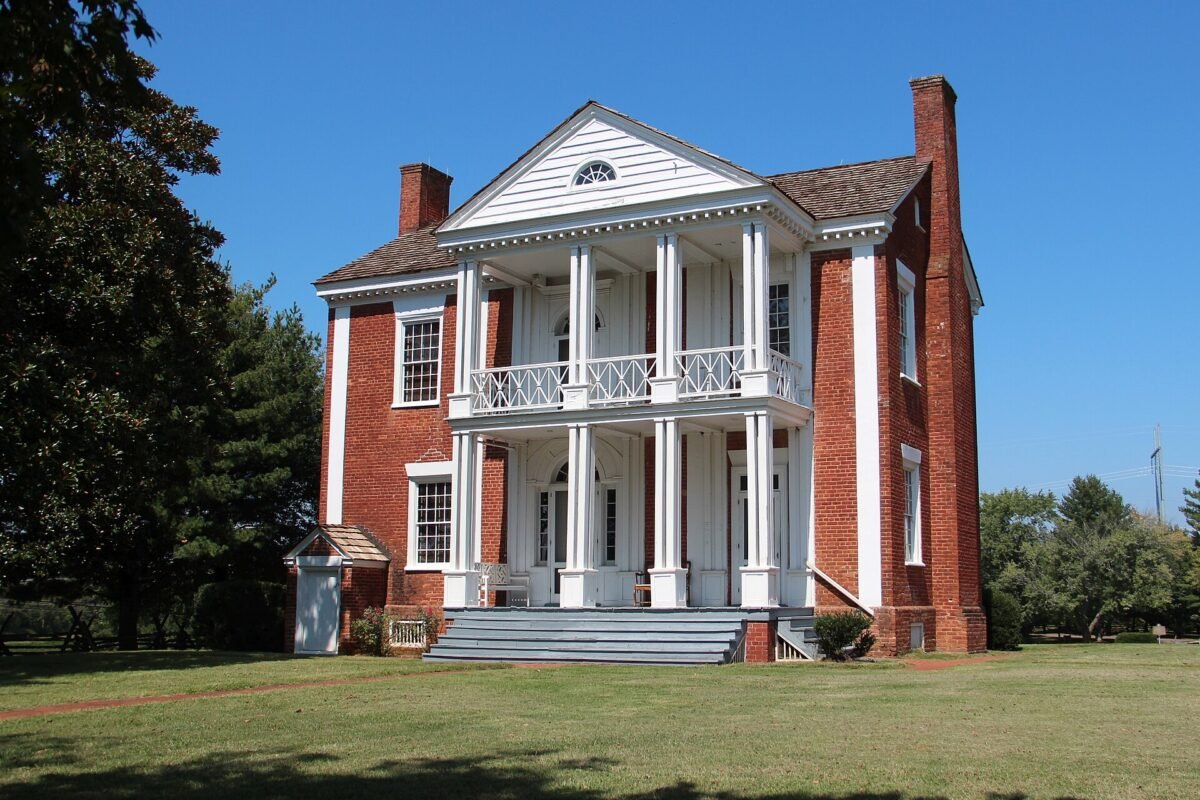
James Vann became a Cherokee leader and wealthy businessman in the 1790s, and he established the largest and most prosperous plantation in the Cherokee Nation, covering about 1,000 acres of what is now Murray County, Georgia. In 1804 he finished a two-and-a-half-story brick house that Georgia’s state parks still describe as the most elegant in the Cherokee Nation. Vann was murdered in 1809. His son Joseph inherited the house and grew richer. In 1834, under Georgia’s land lottery of Cherokee land, Joseph Vann and his family were dispossessed of the house, according to the New Georgia Encyclopedia. The family later rebuilt in the Cherokee Territory of Oklahoma. The plantation also depended on enslaved people: the encyclopedia counts 42 dwellings for them on the property.
The Chief Vann House near Chatsworth is the best-preserved historic Cherokee home in Georgia. The house is seen on a guided tour, and its details include hand carvings, a staircase that seems to float, and a mantel twelve feet long. The 137-acre site also holds a Cherokee farmstead, a half-mile trail, and the location of a Moravian mission and cemetery that once stood at Springplace.
A capital with a printing press
In 1825 the Cherokee national legislature chose a spot at the headwaters of the Oostanaula River to be its capital and named it New Echota. A print shop followed, and on February 21, 1828, the Cherokee Phoenix published its first issue under editor Elias Boudinot, with English and Cherokee text in adjacent columns. Georgia’s state parks call New Echota the site of the first Indian language newspaper office.
The place carries a hard second chapter. The Treaty of New Echota was signed on December 29, 1835, by a small faction of Cherokees while Principal Chief John Ross was away in Washington. The Cherokee Nation’s own history says the signers lacked authority under Cherokee law. A petition from 3,352 Cherokees urged the Senate not to ratify it, according to the National Archives, and the Senate approved it in May 1836 by a single vote. The Cherokee Nation’s Remember the Removal bike ride, about 950 miles across seven states, starts at New Echota and ends in Tahlequah.
Today the state historic site at Calhoun keeps 12 original and reconstructed buildings, among them the Council House, the Court House, the Print Shop, the home of the missionary Samuel Worcester, and an 1805 store. A visitor center shows a 17-minute film. Nature trails lead to New Town Creek and a small beaver pond, and the site lists a 1.5-mile nature trail.
The last council fires
Red Clay, twelve miles south of Cleveland, Tennessee, was the last seat of Cherokee government before removal. Between 1832 and 1837 the Cherokee held eleven general councils there, some drawing as many as 5,000 people. A council planned for 1838 never took place, because removal came first.
Red Clay State Historic Park lies on the Tennessee-Georgia line about 17 miles east of Chattanooga. Its 260 acres hold outdoor replicas of a council house, a farmhouse, a barn, a corn crib, and three sleeping huts. Blue Hole Spring, a natural landmark, supplied water to the Cherokee during their councils. The James F. Corn Interpretive Center has a theater, a library, and a video about the Cherokee and the Trail of Tears. An eternal flame burns on the grounds, returned in April 1984 at the Cherokee Council Reunion, almost 150 years after the original councils.
A river crossing, and a new state park
In 1809 a Cherokee named William Blythe was authorized to operate a ferry where the Tennessee and Hiwassee rivers meet. Between September and November 1838 the ferry carried nine Cherokee detachments, about 10,000 people, across the Tennessee on the northern route of the removal. On November 4, 1838, on the eve of departure, George Hicks wrote to Principal Chief John Ross: “We are now about to take our final leave and kind farewell to our native land.” Thousands of Cherokee and hundreds of Muscogee (Creek) people camped at the landing in harsh conditions while they waited to cross.
The site was a county memorial for years, called Cherokee Removal Memorial Park. On June 2, 2026, Tennessee State Parks dedicated it as Cherokee Trail of Tears State Park, in Meigs County near Birchwood. Tribal partners from the Cherokee Nation and the Eastern Band attended, along with Remember the Removal bike riders. David Salyers, commissioner of the Tennessee Department of Environment and Conservation, said the state will help ensure the park continues to be “a place of reflection and remembrance for future generations.” It is one of 14 new Tennessee state parks planned under Gov. Bill Lee.
The Cherokee Nation’s listing for the landing describes a boardwalk to a wildlife overlook on the bluff, with views of the river and Jolly’s Island, and a granite wall honoring the people who passed through. The Cherokee Nation’s page still uses the park’s old name, and the National Park Service describes a memorial area with a ground map of the trail. The Cherokee Nation page also lists visitor center hours, but because the park changed hands in June, use the hours Tennessee State Parks posts, given below.
The trail itself
Congress established the Trail of Tears National Historic Trail in December 1987. It now covers 5,043 miles of land and water routes across nine states: Alabama, Arkansas, Georgia, Illinois, Kentucky, Missouri, North Carolina, Oklahoma, and Tennessee. The National Park Service administers the trail but owns none of it. The route crosses land managed by public agencies, nonprofits, and private owners, and sites such as Red Clay and the Sequoyah museum are certified as part of it.
Not all of the Cherokee left. The Eastern Band’s own account says the North Carolina Cherokees worked against removal, and that together with others who escaped or came back, they established the Eastern Band of Cherokee Indians. The Cherokee Nation and the Eastern Band are separate sovereign governments with a shared history. The United Keetoowah Band of Cherokee Indians in Oklahoma, headquartered at Tahlequah, calls itself one of only three federally recognized Cherokee tribes. Its members, also known as the Old Settlers, were already moving west before the Trail of Tears began.
Plan your trip
- Sequoyah Birthplace Museum: 576 Highway 360, Vonore, Tennessee. Monday to Saturday 9 a.m. to 5 p.m., Sunday noon to 5 p.m. Closed Thanksgiving, Christmas, and New Year’s Day, with early closings the day before each. Phone 423-884-6246.
- Chief Vann House: 82 Highway 225 N, Chatsworth, Georgia. Thursday to Saturday 9 a.m. to 5 p.m., Sunday 1 to 5 p.m., closed Sundays December through March. Tours at the top of each hour, the last at 4 p.m. Adults $7, seniors $5.25, youth 6 to 17 $6, plus tax. Phone 706-695-2598.
- New Echota: 1211 Chatsworth Highway NE, Calhoun, Georgia. Tuesday to Saturday 9 a.m. to 5 p.m., Sunday 1 to 5 p.m., closed Sundays December through March. Buildings and grounds close at 4:45 p.m. Adults $8, seniors $6, youth 6 to 17 $6, plus tax. Phone 706-624-1321.
- Red Clay State Historic Park: 1140 Red Clay Park Road SW, near Cleveland, Tennessee. Tennessee State Parks lists the visitor center gift shop Tuesday to Saturday 10 a.m. to 4:30 p.m. and Sunday and Monday 1 to 4:30 p.m. Phone 423-478-0339. Fees were not posted on the pages used here, so check Tennessee State Parks before you go.
- Cherokee Trail of Tears State Park: 6800 Blyth Ferry Lane, Birchwood, Tennessee. Tennessee State Parks lists it as a day-use park, open 6 a.m. to 8 p.m. from March through October and 6 a.m. to 5 p.m. from November through February. The visitor center and museum are listed Monday 8 a.m. to noon and Tuesday to Sunday 8 a.m. to 4 p.m. Phone 423-339-2769. The Cherokee Nation’s older listing under the previous park name gives different visitor center hours, so confirm with the state before you go.
- Check before you go. Hours, tour times, and admission can change, and Georgia’s two sites close Sundays from December through March.
Frequently asked questions
Which site is the best place to start?
The Sequoyah Birthplace Museum is a natural opening, since it covers the written language the Nation adopted in 1821. The Chief Vann House and New Echota in Georgia show the Nation’s government and daily life in the decades before removal, and Red Clay and the river landing in Tennessee show its final years.
Who manages these sites?
Georgia State Parks manages New Echota and the Chief Vann House. Tennessee State Parks manages Red Clay and Cherokee Trail of Tears State Park. The Eastern Band of Cherokee Indians manages the Sequoyah Birthplace Museum.
How many Cherokee died on the Trail of Tears?
The Cherokee Nation estimates about 4,000 of the roughly 16,000 people removed. The National Park Service says more than a thousand died on the journey and perhaps several thousand more from its consequences.
How we reported this
Built from Cherokee Nation, Eastern Band, United Keetoowah Band, National Archives, National Park Service, state park, and encyclopedia sources. If something has changed, write to editor@uppersouthjournal.com.
- Cherokee Nation: Our Journey (Remember the Removal)
- Cherokee Nation: history
- Cherokee Nation: Blythe Ferry
- National Park Service and Middle Tennessee State University: Trail of Tears in Tennessee (brochure)
- Eastern Band of Cherokee Indians: culture
- National Park Service: Trail of Tears National Historic Trail, its history page, and its FAQ
- National Park Service: Red Clay State Historic Park
- National Park Service: Sequoyah Birthplace Museum and the museum’s own site
- National Park Service: Cherokee Trail of Tears State Park, Blythe Ferry
- Tennessee Department of Environment and Conservation, June 3, 2026: Tennessee State Parks dedicates Cherokee Trail of Tears State Park
- Georgia State Parks: New Echota and Chief Vann House
- Georgia Encyclopedia: Cherokee Phoenix and Chief Vann House
- National Archives DocsTeach: Treaty of New Echota, 12/29/1835
- Cherokee Phoenix: Dec. 29 marks Treaty of New Echota’s 182nd anniversary
- United Keetoowah Band of Cherokee Indians in Oklahoma and its About Us page
- Tennessee State Parks: Cherokee Trail of Tears State Park and Red Clay State Park
- Tennessee Encyclopedia: Sequoyah and Red Clay State Historic Park