On January 24, 1967, Aretha Franklin came to a recording studio in a small Alabama town to record. Jerry Wexler of Atlantic Records brought her there. Roger Hawkins played drums, Tommy Cogbill played bass, and Spooner Oldham played electric piano. The studio’s founder, Rick Hall, engineered the session. The two songs cut that day, “I Never Loved a Man (The Way That I Love You)” and “Do Right Woman, Do Right Man,” became the two sides of a number one record.
That record became her first million-seller. It also did something larger for a place most listeners could not have found on a map. Muscle Shoals, a cluster of river towns in the northwest corner of Alabama, became a name that artists asked for.
Nearly sixty years on, the two studios behind that reputation are open to the public, a documentary has told the story to a national audience, and the Country Music Hall of Fame in Nashville has given the Shoals a major exhibition. The history is worth knowing before anyone buys a ticket.
Rick Hall and the studio on Avalon Avenue
Hall was born on January 31, 1932, in Tishomingo County, Mississippi. He co-founded Florence Alabama Music Enterprises in 1959 with Tom Stafford and Billy Sherrill, then took sole ownership and shortened the name to FAME. In the early 1960s, the operation settled on East Avalon Avenue in Muscle Shoals, the address where FAME still operates.
The first national hit came from Arthur Alexander. “You Better Move On” was released on the Dot label in December 1961 and reached number 24 on the pop charts. The Alabama Music Trail at the University of North Alabama records what Hall said he heard while shopping it around Nashville: most labels called it too Black for country and too country for Black music. That gap, the one nobody in the industry knew how to sell, turned out to be the Shoals’ specialty. R.J. Smith, who co-organized the Country Music Hall of Fame’s Shoals exhibition, told Nashville Public Radio in February 2026 that FAME was the first professional recording studio in Alabama.
Hall’s sessions drew a long list of soul artists through the 1960s. Wilson Pickett’s “Land of 1,000 Dances” came out of a mid-1966 session with Wexler and became his first Top 10 hit. Pickett later cut “Hey Jude” there with a guitar solo by Duane Allman, who had spent part of 1968 camping outside the studio. Hall’s description of him is preserved on FAME’s site: “Some hippie cat who’s been living in our parking lot.” Clarence Carter’s “Slip Away” and Etta James’s “Tell Mama” followed in 1968. FAME’s own count puts the sales of records it has recorded or published at more than 400 million worldwide.
One famous record of the era was cut a few miles away. Percy Sledge’s “When a Man Loves a Woman” was made at Quinvy Recording Studio in Sheffield. It topped the pop and R&B charts in 1966, the first number one from the Shoals.
The mix of musicians in the studios mattered as much as the hits. The Country Music Hall of Fame’s exhibition describes how Black and white musicians worked together in the Shoals during segregation. Songwriter Dan Penn, whose overalls are on display in Nashville, described the sessions to NPR as “white people and Black people playing together, and a lot of respect both ways.” The line describes a recording room. The Shoals outside it was still a segregated place, and the story is richer for keeping both facts in view.
Hall’s relationship with the biggest name he worked with was short. The Alabama Music Trail reports that the January 1967 Franklin sessions ended in a confrontation involving her husband and manager, Ted White. Wexler blamed Hall, and the two men never worked together again. FAME’s own page on the sessions quotes Hall saying Franklin “was to change my musical life forever.”
The Swampers leave, and 3614 Jackson Highway opens
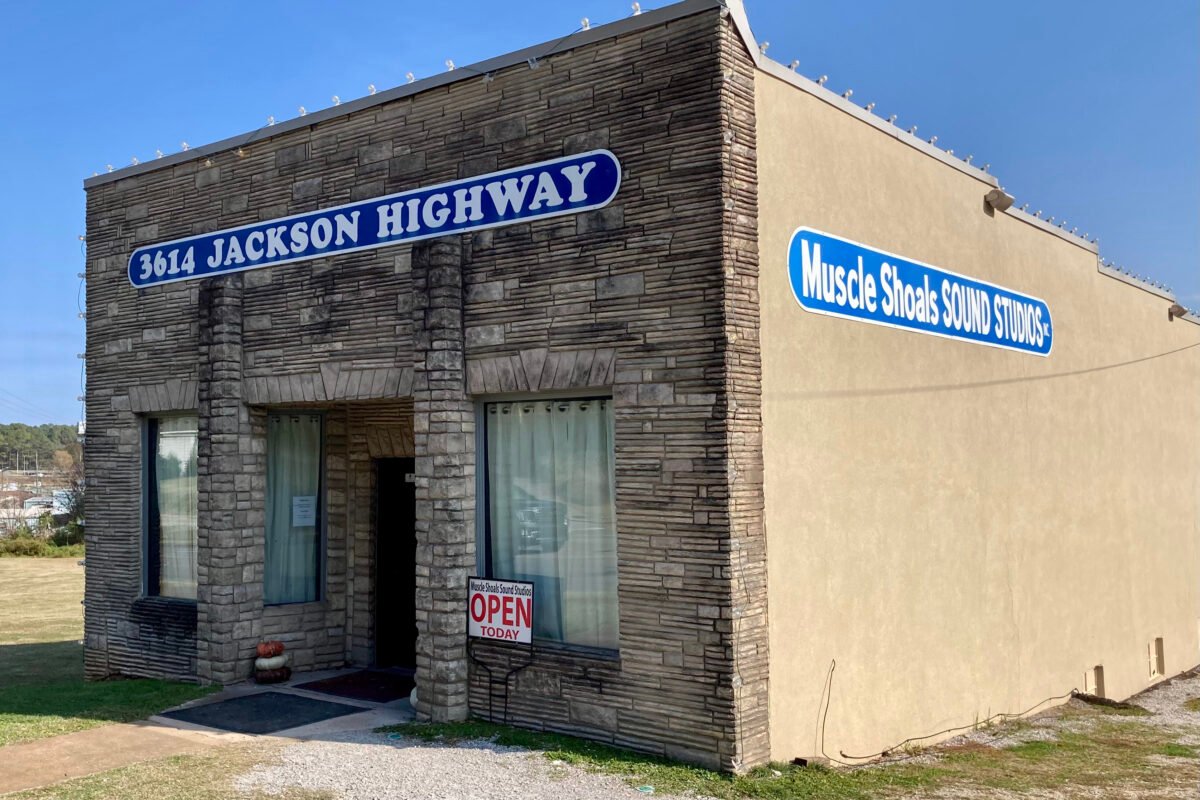
By 1969, the house rhythm section had played on a stack of hits. Barry Beckett on keyboards, Roger Hawkins on drums, David Hood on bass, and Jimmy Johnson on guitar left FAME that year and formed Muscle Shoals Sound Studio. Wexler gave them financial help. The studio opened in April 1969 in a former studio building at 3614 Jackson Highway in Sheffield. Hall answered by putting together a new house band, the FAME Gang.
The first record cut at the new address was an album by Cher, titled 3614 Jackson Highway for the street number. It sold poorly. Later that year, in early December, the Rolling Stones came to record “Brown Sugar,” “Wild Horses,” and “You Gotta Move,” days before their Altamont concert in California.
The 1970s belonged to the Swampers. In 1972, the Staple Singers cut “I’ll Take You There” in a two-day session. It sold more than two million copies and earned the studio its first platinum record. Paul Simon recorded in 1972 with the section, and “Kodachrome” and “Loves Me Like a Rock” both peaked at number two. He returned four times in 1973 for the album There Goes Rhymin’ Simon. Lynyrd Skynyrd’s early recordings were produced there by Johnson in 1971 and 1972, and the band’s 1974 hit “Sweet Home Alabama” paid tribute to the section. Bob Seger worked with the studio through the middle of the decade.
In 1978, the studio moved to a larger building at 1000 Alabama Avenue. Noel Webster, a sound engineer, bought the original Jackson Highway building in 1999. It was listed on the National Register of Historic Places on June 2, 2006. The Black Keys recorded their Grammy-winning album Brothers there in 2010. In June 2013, Webster sold the studio to the Muscle Shoals Music Foundation, the nonprofit that owns and operates it today.
Time has been hard on the original lineup. Beckett died on June 16, 2009. Johnson died in 2019 and Hawkins in 2021, according to the Encyclopedia of Alabama, which describes David Hood as the only remaining original Swamper.
The story gets a wider audience
In January 2013, the documentary Muscle Shoals premiered at the Sundance Film Festival. Greg “Freddy” Camalier directed it, and Magnolia Pictures released it in the United States on September 27, 2013. Rick Hall and the two competing studios are its center.
In November 2025, the Country Music Hall of Fame and Museum opened Muscle Shoals: Low Rhythm Rising, an exhibition of more than 5,000 square feet that surveys the emergence of the Shoals as a recording center in the 1960s and 1970s. R.J. Smith and Michael Gray organized it. A companion catalog carries a foreword by Jason Isbell, who signed a publishing deal with FAME around 2000. Candi Staton, who recorded “Jolene” in the Shoals, credits her albums there with launching her solo career, NPR reported. The museum announced it for nearly three years, so check with the museum before planning a Nashville trip around it.
What a visitor can see
The two studios offer tours, and the Alabama Music Hall of Fame stands a few miles west in Tuscumbia.
FAME Studios, at 603 East Avalon Avenue in Muscle Shoals, offers a standard tour of about an hour on weekdays and Saturdays, plus a backstage tour that is not wheelchair accessible. The studio is closed to tours on July 4, from Thanksgiving through Thanksgiving weekend, and over the Christmas and New Year holidays. Holiday schedules vary, and FAME asks visitors to call 256-381-0801. Check tour times and prices before you go.
Muscle Shoals Sound Studio, at 3614 North Jackson Highway in Sheffield, offers guided tours Tuesday through Saturday. Check tour times and prices before you go. The building is the small concrete structure where the Swampers worked, and its restoration kept features like the orange carpet and paneling. Visitors can play the piano and the drums. Groups should call 256-978-5151 well ahead.
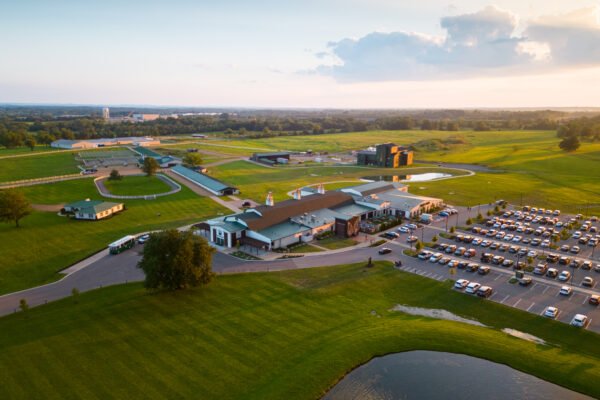
The Alabama Music Hall of Fame, at 617 Highway 72 West in Tuscumbia, opened on July 26, 1990, and drew more than 35,000 visitors. It is a state agency. Its 12,500-square-foot hall holds the tour bus used by the band Alabama and an exhibit on Sam Phillips and Sun Studios, along with a gallery on Muscle Shoals music and a permanent walk of fame in bronze. On July 18, 2026, it opened a permanent exhibit on the Huntsville blues musician Microwave Dave Gallaher. The hall is open Tuesday through Saturday. It is closed Sunday and Monday, and on July 4, Thanksgiving Day, Christmas Eve, Christmas Day, and New Year’s Day. Parking is free. Check hours and admission before you go. The hall’s site puts the drive from Nashville at about two and a half hours.
For anyone planning around music, ShoalsFest is set for October 3 and 4 at McFarland Park in Florence, with Jason Isbell and the Drive-By Truckers performing the album Decoration Day in full. Jeff Tweedy and S.G. Goodman are also on the bill.
Plan your trip
- FAME Studios: 603 East Avalon Ave., Muscle Shoals. Tours weekdays and Saturday; closed to tours for Thanksgiving and the Christmas holidays. 256-381-0801.
- Muscle Shoals Sound Studio: 3614 N. Jackson Hwy., Sheffield. Tours Tuesday to Saturday. 256-978-5151.
- Alabama Music Hall of Fame: 617 Highway 72 West, Tuscumbia. Open Tuesday to Saturday. Free parking.
- Check before you go. The studios and the hall post their own hours and prices, and holiday schedules change.
Frequently asked questions
Who were the Swampers?
The Swampers were the Muscle Shoals Rhythm Section: Barry Beckett on keyboards, Roger Hawkins on drums, David Hood on bass, and Jimmy Johnson on guitar. They left FAME in 1969 to found Muscle Shoals Sound Studio at 3614 Jackson Highway in Sheffield.
Which famous records were made at FAME?
Arthur Alexander’s “You Better Move On,” Wilson Pickett’s “Land of 1,000 Dances,” Aretha Franklin’s “I Never Loved a Man (The Way That I Love You),” Clarence Carter’s “Slip Away,” and Etta James’s “Tell Mama” are among them. Percy Sledge’s “When a Man Loves a Woman” was recorded at Quinvy Recording Studio in Sheffield.
Can visitors tour the studios?
Yes. FAME Studios and Muscle Shoals Sound Studio both offer guided tours, and each posts its own hours and prices. Check before driving.
How we reported this
Built from the studios’ own websites, encyclopedia entries, university and museum resources, and news coverage. If something has changed, write to editor@uppersouthjournal.com.
- FAME Studios, its history, its Aretha Franklin page, and its tour page
- Muscle Shoals Sound Studio and its visit page
- Encyclopedia of Alabama: Rick Hall, Muscle Shoals Sound Studio, Muscle Shoals Rhythm Section, and Alabama Music Hall of Fame
- Alabama Music Trail, University of North Alabama: FAME Studios and Muscle Shoals Sound Studio
- Alabama Music Hall of Fame: hours, history, and admission
- WAFF, July 15, 2026: Alabama Music Hall of Fame to open Microwave Dave exhibit
- MusicRow, November 14, 2025: Country Music Hall of Fame celebrates opening of Muscle Shoals: Low Rhythm Rising
- NPR via WLRN, February 8, 2026: A Nashville museum celebrates the role of a small town in American music
- North Alabama (Alabama Mountain Lakes Tourist Association), March 12, 2026: Where the music still feels alive at Muscle Shoals Sound Studio
- Pollstar, May 7, 2026: Jason Isbell unveils details for 2026 ShoalsFest
- Country Music Hall of Fame and Museum: Muscle Shoals: Low Rhythm Rising and its September 10, 2025 announcement
- FAME Studios: Jason Isbell
- Rolling Stone, January 24, 2013: Sundance doc Muscle Shoals, NPR review, September 26, 2013, and Box Office Mojo