Great Smoky Mountains National Park put out another reminder last week that nobody should be moving rocks in its streams. It is a warning the park and its partners have been giving for more than a decade. Friends of the Smokies was asking visitors to leave stream rocks alone in 2015. The question it tends to meet is whether one little stack really matters.
It does. Leave the rocks where the river put them.
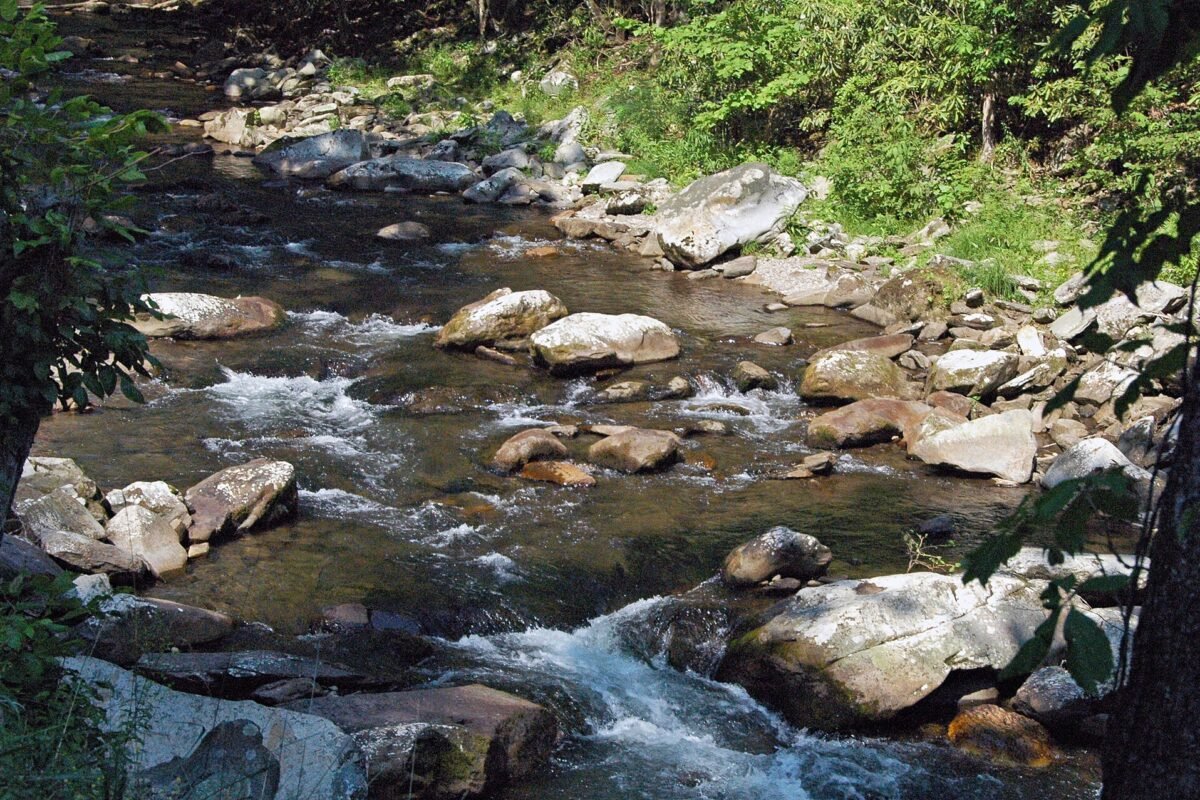
What looks like a streambed of loose, decorative stones is a building. The spaces under and between those rocks are where things live. The park’s warning spells it out: moving rocks destroys the shelter where fish, salamanders, and other aquatic animals live, hide, and lay eggs. Lift a flat rock to add it to a stack and you have taken the roof off somebody’s house.
The animal that makes the point best is the hellbender. It is the largest salamander in North America, able to grow up to two feet long, and it lives in the crevices under big stream rocks. It is listed as Near Threatened, mostly because of habitat loss. Last September park staff reported finding a hellbender dead, crushed under rocks that visitors had moved to build a stack. That was a two-foot animal that had survived everything else a Smokies stream can throw at it, killed by a stack of rocks.
Tennessee knows how much that animal is worth to visitors. When Roan Mountain State Park was named State Park of the Year this month, one of the additions the state singled out was a storybook trail built around a hellbender named Benny. We are teaching children to love these animals at one park while their shelter gets stacked into sculptures a couple of hours down the road.
I think most people who stack rocks are doing something that looks harmless and that they have seen a hundred times. That is the actual problem. Rock stacking in streams is a habit that spread through photographs. It looks calm and considered on a phone screen, and it gets repeated because it gets posted. Very little of it has anything to do with the place.
The same park is asking visitors this fall to photograph invasive Joro spiders and report them, so researchers can map how fast they are spreading. That is a phone in the Smokies doing real work, and the contrast is worth sitting with. Pointed at a spider on a trailside web, a camera helps the park understand the place. Pointed at a stack of rocks in a creek, it advertises the stack and invites the next one.
Cairns do have a real job outdoors. On bare rock where a trail is hard to see, land managers use them to mark the route, and a hiker in fog can be glad of them. That is the reason random stacks on trails are a problem too: they tell people the way is somewhere it is not. A cairn is a sign, and one built where no sign belongs gives directions nobody asked for. In a stream, a stack is only a pile of other animals’ shelter, rearranged so it catches the light.
The standard outdoor ethic already covers this. Leave No Trace has a principle called Leave What You Find, and it applies to rocks in a creek exactly as it applies to wildflowers on a bank or artifacts at an old homesite. The rule is easy to remember because it asks for nothing. You do not need gear, training, or a permit to follow it.
The fix costs nothing. Look, photograph, and put nothing on top of anything. If you want to do something with your hands in the water, turn over nothing and pick up trash. The river never needed that either. If you are with children who want to build, the gravel bar above the waterline is a better place for it than the stream itself, and the stones can go back where they came from before you leave.
I am skeptical by nature of outdoor advice that asks people to feel guilty about small things while the big decisions get made elsewhere, and there are bigger threats to Smokies streams than a family at a swimming hole. This one is different in a way that matters. It is entirely within the control of the person standing in the creek. There is no permit to wait for and no budget to argue over. The damage happens one rock at a time, and so does the fix.
The Smokies has earned its reputation as a salamander stronghold by being left alone in the places that count. The streams are the places that count. Leave the rocks where they are, and teach whoever is with you to do the same.