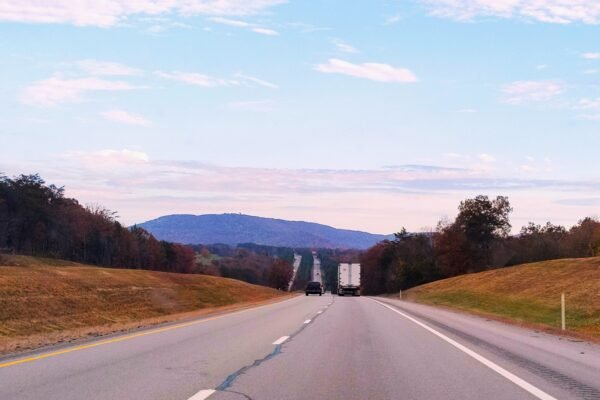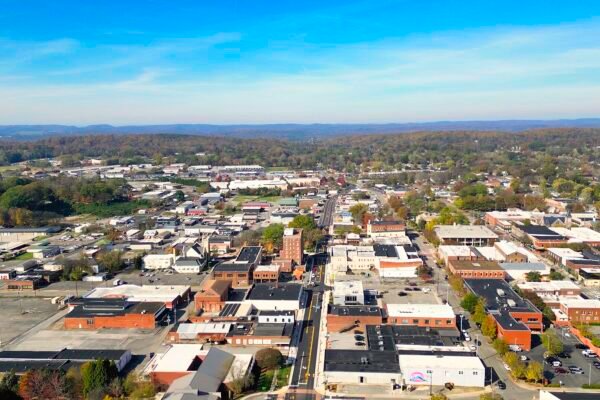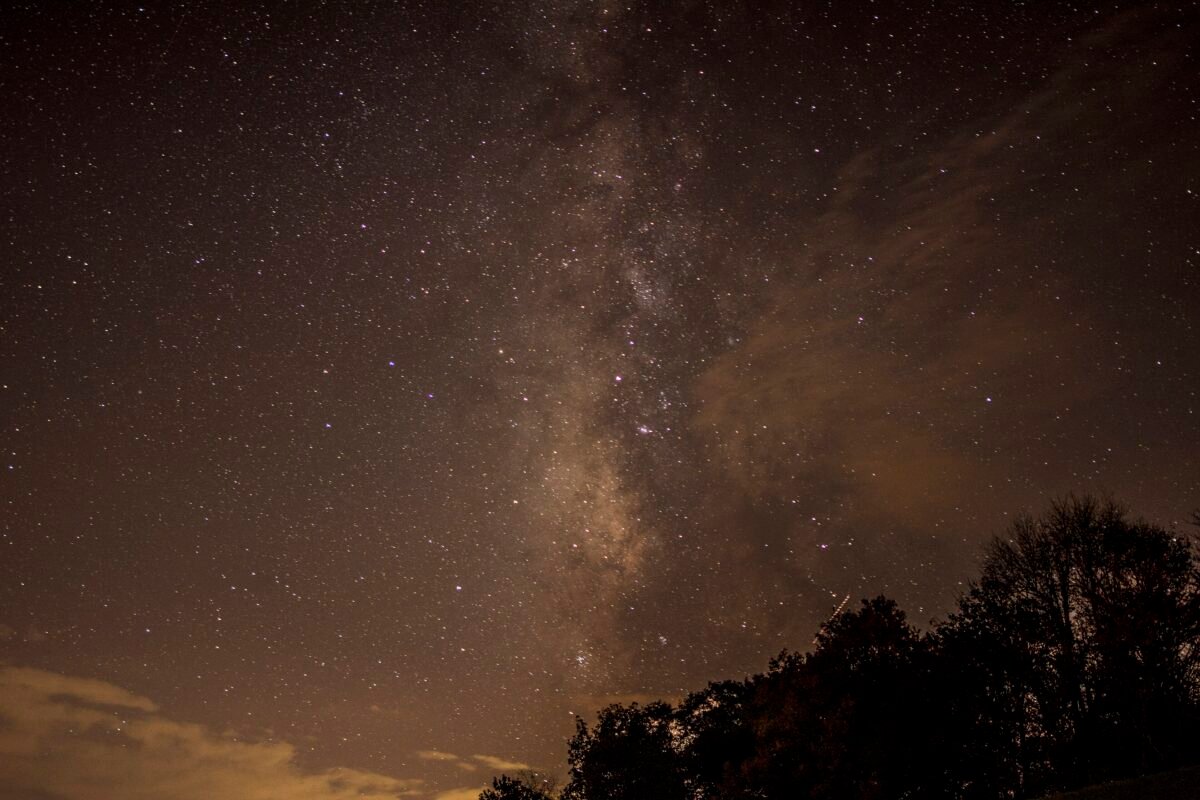
In 2015, a Tennessee official said something worth taking at his word. Brock Hill, then deputy commissioner for Parks and Conservation, welcomed a new designation with these words: “As one of the few dark areas left in Tennessee, we believe in preserving the dark sky for future generations,” as reported by The Chattanoogan. He was talking about Pickett CCC Memorial State Park and the Pogue Creek Canyon State Natural Area, which together became a Silver-tier International Dark Sky Park.
Eleven years later, the designation covers the park. It does not reach the land and the lights around it. I think the counties of the Cumberland Plateau should adopt outdoor lighting rules now, while the rules cost almost nothing, and before the argument becomes about removing lights people already own.
What the Plateau has
The state tourism department describes both Obed and Pickett as International Dark Sky Parks, and both lie on or at the edge of the Plateau. Pickett was the first Southeastern state park designated as a Silver-tier International Dark Sky Park, and it cleaned up its own lighting first. The park rehabilitated the small amount of lighting on the two properties with a Clean Tennessee Energy Grant.
Obed Wild and Scenic River followed in October 2017. The National Park Service called it the second unit east of Colorado and the 17th national park in the country with the designation, in its announcement. The ranger staff has offered astronomy programs there since 2013, with help from the ORION Astronomy Club in Oak Ridge and the Knoxville Observers. Farther north, Big South Fork’s own lightscape page says park staff are working to reduce light pollution inside the boundary, and that astronomy programs in the Bandy Creek area date to the early 1990s.
These are public lands, managed by public agencies, and they have done the work. A designation requires measurements and annual audits, as a 2022 account in the Environmental Journal of Southern Appalachia explains. That same piece adds that outside a park, protecting the sky falls to the nearby communities, especially the towns at a park’s edge, by voluntary action, by ordinance, or both.
Why it will not hold by itself
The research on where skies are heading is not subtle. A 2016 atlas of artificial night sky brightness in Science Advances found that more than 99 percent of people in the United States and Europe live under light-polluted skies, and that nearly 80 percent of North Americans cannot see the Milky Way from where they live. A 2023 study in Science, built on more than 51,000 naked-eye observations from the Globe at Night project, estimated that sky brightness is rising about 10.4 percent a year in North America. The study counts the stars people can actually see, and Eos reported that the loss is running faster than satellite measurements had suggested.
The Plateau still has what those places lost. A dark sky is a resource that disappears one fixture at a time: a floodlight on a new barn, a bare bulb on a new gas station canopy, a hundred porch lights where there used to be a hayfield. Obed’s own ranger, Rick Ryan, put it this way: “Dark sky is a natural resource that is disappearing over time.”
What a rule could look like
Nobody needs to invent this. The National Park Service publishes six lighting principles: light only what is necessary, only where needed, with fully shielded fixtures, only when needed, at the lowest useful level, and in warm colors around 2700 Kelvin.
Other places have turned that into law. Flagstaff, Arizona, passed a 1958 ordinance limiting searchlights. Lowell Observatory describes it as the first lighting ordinance written to preserve dark skies. The city was named the world’s first International Dark-Sky City in 2001. Nashville’s Metro Council passed a dark sky ordinance in April 2021 that requires fixtures aimed where light is needed, controls that dim or switch off unused lights, and a 3000 Kelvin ceiling, according to Metro General Services. It applies to private streetlights and to construction or major renovation of commercial and multifamily buildings, and it leaves existing residential rules alone.
Summit County, Utah, is the better model for a rural county. It adopted its ordinance in 2019 and required shielded, downward-pointed fixtures and 3000 Kelvin bulbs. New lighting had to comply immediately. Existing lighting got until the end of 2024, KPCW reported, and agricultural facilities in the eastern part of the county were allowed brighter lights as long as they were shielded and aimed down. That is five years of notice, an exemption for farm facilities, and a rule an enforcement officer can check by looking up.
The objections, taken seriously
The first objection is cost. A rule that forces a county’s residents to replace lights they already own is a real burden on people with little to spare, and rural Tennessee has many of them. The answer is to write the rule for new fixtures first. Summit County’s five-year runway for old ones shows that phasing is possible. A National Park Service article cites an estimate that about 30 percent of the light generated in the United States is wasted, at a cost of billions of dollars. A light that shines into the sky is a light the owner pays to power for no benefit.
The second objection is freedom. People who bought land on the Plateau often bought it because nobody told them what to do with it. I take that seriously, and a rule that fines a farmer for lighting a barn would deserve the anger it got. A good ordinance regulates the direction and the shielding of a light. It does not regulate whether a person may have one. A porch light that points down still works.
The third objection is safety, and it is the strongest. A randomized experiment in New York City public housing found that temporary streetlights cut nighttime outdoor index crimes by at least 36 percent. More light is not always more safety, and that study does not tell us what a lit parking lot on the Plateau should look like. It does show that a lighting rule should never treat safety as an afterthought. The NPS principles already cover it: light what needs lighting, and shield it so the glare does not blind the people it is meant to protect.
The law is not the obstacle
The legal route is narrower than it looks. A July 2026 policy guide from the University of Tennessee’s Center for Local Planning notes that counties without comprehensive zoning often rely on the County Powers Act, which lets them use a two-thirds vote to exercise broader police powers. In February 2026, the Tennessee Supreme Court held in Tinsley Properties v. Grundy County, a case from the Plateau, that a resolution banning quarries near schools, churches, and subdivisions was really zoning, and was unenforceable because the county skipped zoning procedures, the guide says.
That ruling should discourage a lighting rule that draws districts or buffers. The same guide offers a countywide noise ordinance as a potentially defensible example of a general, uniformly applied measure. A lighting rule that applies the same shielding standard to every new fixture in the county looks much closer to that example than to a quarry buffer. That is my reading, not the guide’s, and a county attorney should check it before a commission votes. The path is open enough to try.
What to do before the next fixture goes up
A county commission could start small: a standard for new commercial and public lighting, fully shielded and aimed down, warm in color, with a long phase-in for anything already installed and a clear exemption for agriculture. The National Park Service has already written the standard, and Summit County has tested a version of it in a rural setting. A county only has to adopt it.
In 2015, the state said the darkness at the edge of the Plateau was worth preserving for future generations. Those generations are in school now. Whether they get to see a sky worth preserving depends on what gets bolted to the next pole.